How I Actually Use AI as a Designer
Published on
Reading Time
4 mins
There's a lot of noise right now about AI replacing designers. I'm not here for that conversation. What I am here for is the honest version of what it looks like when a designer actually integrates AI into their work, not the polished LinkedIn version, the real one.
Here's how AI shows up in my day.
It helps me think deeper, faster.
Before I even open Figma, I'm using AI to get smarter about the problem. Who is the client, who are their customers, what are the patterns in the space? I use Claude to help me strategize, outline what's next, and build a point of view before I put anything on a screen. It's not doing my thinking for me. It's helping me think further than I could on my own in the same amount of time.
It's changed how I build personas and make design decisions.
I used to spend days on research synthesis. Now I can feed in data, interviews, and behavioral patterns and come out the other side with personas that are grounded in something real. From there I can articulate why I'm making specific design choices instead of going on gut alone. The work gets sharper and I can defend it better.
It's made me faster in the design tool itself.
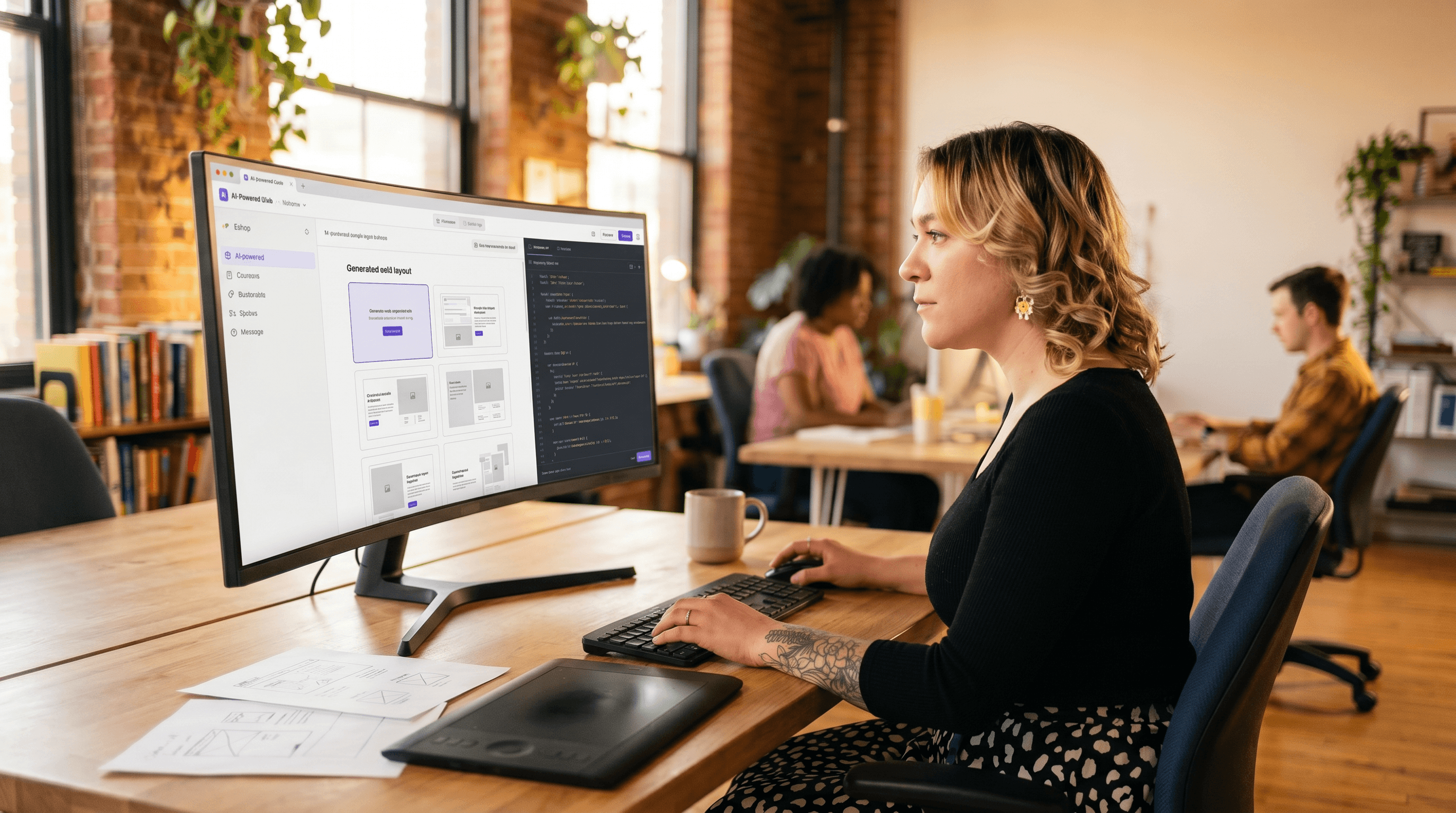
I use Claude Design to upload design systems, wireframe quickly, and move through concepts without getting stuck in production mode. Figma Make and Figma AI help me synthesize, iterate, and get to a testable idea in a fraction of the time. I'm not skipping steps, I'm compressing the ones that used to eat hours without adding much thinking.
But the more interesting question isn't how I use AI. It's how I design for it.
A while back I was working on a large-scale digital engagement and the team pushed a concept that went well beyond a traditional website redesign. We weren't just designing pages. We were designing an AI-native experience that would guide users through the entire site dynamically, based on who they were.
Not a chatbot. Something more considered than that. Imagine landing on a financial services website and instead of a static homepage built for everyone, the experience already knows something about you. Where you came from, what kind of investor you are, what you're likely looking for. The content shifts. The pages surface differently. The narrative the site tells you changes based on your persona, your entry point, and what you've already engaged with. The AI isn't a feature bolted onto the side. It's the architecture.
For larger organizations especially, this kind of thinking reframes what a website even is. It stops being a brochure and starts being a conversation. The design system underneath it has to account for every persona, every signal, every possible version of the experience. You're not designing screens anymore. You're designing a system of possibilities.
That concept stayed at the wireframe and pitch stage. The technology wasn't ready on the client's backend to support it at the time. But the work of designing it changed how I think about what digital experiences can be when AI is the foundation rather than the feature.
What I've learned.
AI doesn't make you a better designer if you don't already know how to think. It amplifies what's already there. If you're sloppy, it makes you faster at being sloppy. If you're strategic, it makes you more strategic. The designers who are going to thrive right now aren't the ones who resist it or hand everything over to it. They're the ones who stay in the room as the decision maker and use AI to go further than they could alone.
That's where I'm trying to be.
I also use AI in my personal creative work.
Design doesn't stop when the client work does. I use AI image generation tools, specifically Nano Banana Pro, to explore visual ideas, edit photos, and create graphics quickly when I need something that tells a story without a full production process behind it. Whether it's roughing out a concept for a presentation, generating imagery that sets a mood, or just playing with ideas visually, having that tool in my kit means I spend less time blocked by production constraints and more time thinking about what I actually want to say.
For me this is where AI gets genuinely fun. It's looser, more experimental, and it's made my personal creative practice faster and more prolific. That energy feeds back into the client work too.